
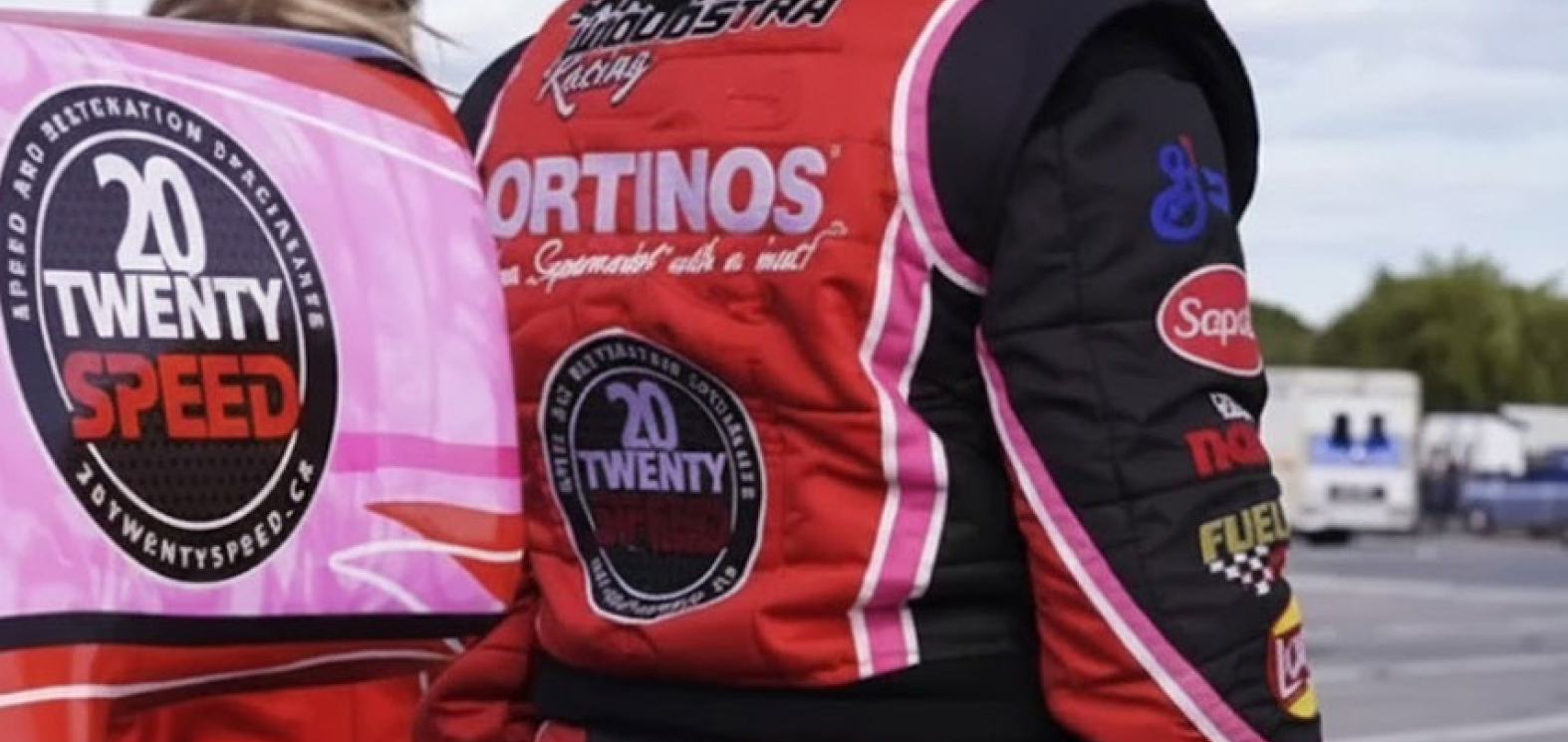

A fire in a race car is a low-probability but high-consequence event. The entire system of driver safety equipment — suit, gloves, shoes, undergarments, balaclava — exists to give a driver the seconds they need to exit the car safely when that event occurs. Each piece in the system has a specific job, a specific certification standard, and a specific relationship to the other pieces around it.
This guide covers every component of a complete SFI driver fire safety kit for Canadian motorsport — what each piece does, which certification you need for your series, how the pieces work together, and how to build a complete kit from a single Canadian supplier.
Why the Complete System Matters
The most common mistake Canadian racers make when buying fire safety equipment is purchasing pieces individually without considering how they interact. A driver who has an SFI 3.2A/5 suit but wears cotton socks and no gloves has a gap in their protection system at exactly the points where the body is most exposed to heat — hands, feet, and face.
Fire protection in motorsport works on the principle of layers and coverage. Each certified piece adds thermal protection at a specific surface area of the body. The Thermal Protection Performance (TPP) rating of a suit describes how long that piece alone provides protection before a second-degree burn occurs. When you add SFI 3.3 certified undergarments, gloves, shoes, and a balaclava, the combined TPP across the full system is substantially higher than any single piece provides alone.
The dead air space between layers also contributes to thermal insulation — a driver wearing undergarments beneath a suit has not just added one more layer of Nomex, they have created an insulating air gap that meaningfully slows heat transfer. Understanding this principle is why every safety professional in sanctioned motorsport recommends the full system, not just the suit.
Piece 1 — The Racing Suit
The racing suit is the largest and most visible piece of the fire safety kit. It covers the torso, arms, and legs and is the primary outer barrier between a fire event and the driver’s skin.
Choosing the right SFI rating for your series
SFI 3.2A/1 — single-layer construction providing basic fire resistance. Required in entry-level sanctioned events and club-level classes that mandate SFI certification but allow the minimum standard. An SFI 3.2A/1 suit is lighter than multi-layer alternatives, making it a good choice for long race days in warm conditions when paired with mandatory SFI 3.3 undergarments.
SFI 3.2A/5 — multi-layer construction with significantly higher TPP than a single-layer suit. Required by the majority of Canadian oval track, late model, modified, stock car, and drag racing series. If you are uncertain which rating your series requires, SFI 3.2A/5 is the safest default — it is accepted everywhere a 3.2A/1 is accepted and required in many series that do not permit 3.2A/1.
SFI 3.4 — the NASCAR-specific suit specification required for NASCAR top 3 national series (NCS, NOAPS, NCTS). SFI 3.4 is a distinct standard from 3.2A and is not interchangeable — it covers specific material, construction, and testing requirements particular to NASCAR’s technical regulations. 3.4 suits are commonly accepted wherever a 3.2a suit is accepted.
SFI 3.2A/15 — A higher-level multi-layer fire suit designed for racing classes where increased thermal protection is required due to higher fuel loads, longer fire exposure potential, or more demanding safety regulations. Commonly required in many higher-horsepower drag racing classes and other forms of motorsport with elevated fire risk. While it offers substantially greater thermal protection than an SFI 3.2A/5 suit, it is generally heavier and warmer because of the additional protective layers.
SFI 3.2A/20 — One of the highest levels of SFI fire protection available, intended for professional motorsport applications where maximum thermal protection is required. Typically specified for the fastest drag racing categories and other specialized racing classes with the highest potential fire exposure. SFI 3.2A/20 suits provide significantly greater protection than lower-rated suits but also add weight and insulation. Drivers should always choose the certification required by their sanctioning body, as higher ratings are generally accepted wherever lower SFI 3.2A ratings are permitted.
FIA 8856-2018 — the international standard required for ASN Canada FIA sanctioned events including formula car racing, GT racing, and rally. FIA certification and SFI certification are separate systems. Confirm with your series which standard applies before purchasing.
EPIC Racewear produces fully custom suits to SFI 3.2A/1, SFI 3.2A/5, SFI 3.4, and FIA 8856-2018 standards. Every suit is built to your design from Walkerton, Ontario.
Suit expiry
SFI certification on 3.2/a racing suits do not have a specific expiry date, however, we recommend replacement after 5 years of use, or whenever the suit has been damaged or compromised. (soiled, exposed etc.). SFI 3.2a/15 & 20, along with FIA rated suits, expire five years from the date of manufacture. This date is on the certification label sewn onto the suit. A suit past its expiry date will fail tech inspection at most sanctioned Canadian events regardless of its physical condition. Replace suits before the label expires, not when the suit looks worn.
Piece 2 — SFI 3.3 Undergarments
Undergarments are the most underappreciated component of a complete fire safety kit. They go on before everything else and provide the base layer of Nomex protection directly against the skin.
What undergarments do
When you wear SFI 3.3 certified or FIA approved undergarments beneath your suit, the combined TPP of both layers is substantially higher than the suit alone. The suit’s TPP figure is measured as a standalone piece — add undergarments and the combined protection time increases meaningfully. The dead air space between the undergarment and the suit adds additional thermal insulation on top of the material properties of both pieces.
Non-certified synthetic underwear — athletic base layers, compression shorts, regular socks — are not a substitute. Synthetic fabrics can melt and bond to skin in a fire event, dramatically worsening injury. Only SFI 3.3 certified and FIA approved Nomex undergarments meet the standard for fire-safe base layers.
The full undergarment set
A complete undergarment system consists of three pieces:
Nomex long-sleeve top — covers the torso and arms, sitting directly beneath the suit. Soft knitted Nomex construction against the skin with moisture-wicking properties for long sessions.
Nomex pants — covers the lower body from waist to ankle, sitting beneath the suit legs. Pair with nomex socks at the ankle to eliminate any gap in coverage.
Nomex socks — often the most overlooked piece. Certified Nomex socks fill the gap between the suit and the foot, ensuring that skin-level heat exposure at the ankle and foot is covered regardless of how good the racing shoes are.
EPIC Racewear’s SFI 3.3 undergarments — tops, pants, and socks — are available for Canadian and US customers shipping from Walkerton, Ontario.
Piece 3 — SFI 3.3/5 Racing Gloves
Your hands are on the steering wheel for every second of a race. In a fire event, they are among the most exposed surfaces on the body — close to the dashboard, the wheel, and the heat rising from the footwell.
SFI 3.3/5 is the two-layer glove certification required by most Canadian and American sanctioned racing series. The “/5” indicates two-layer construction, providing a higher TPP than SFI 3.3/1 single-layer gloves. Most series that require certified gloves specify SFI 3.3/5 as the minimum acceptable standard.
The gauntlet cuff on SFI 3.3/5 gloves extends over the suit sleeve, sealing the gap at the wrist — one of the most critical transition points in the full kit. Without certified gloves extending over the suit cuff, there is unprotected skin exposed at exactly the point where flame would find the first gap.
EPIC Racewear builds fully custom SFI 3.3/5 racing gloves matched to your race suit design.
Piece 4 — SFI 3.3/5 Racing Shoes
Feet are in the closest proximity to fuel lines, exhaust, and heat sources in most race car cockpit configurations. SFI 3.3/5 racing shoes provide certified fire protection at the foot and ankle, working with SFI 3.3 Nomex socks to eliminate any gap between the suit leg and the shoe’s Nomex lining.
Without SFI 3.3 socks worn inside certified shoes, there is a skin-level gap at the ankle where the shoe’s Nomex lining ends and the skin begins. Socks close that gap. Shoes and socks function as a system — neither performs the full protection job alone.
SFI 3.3/5 racing shoes use a thin sole designed to transmit pedal feedback clearly — the same sole thickness that makes a racing shoe a performance tool also keeps the foot low in the pedal box, away from heat sources. EPIC Racewear’s custom SFI 3.3/5 racing shoes are built with colour matched outer panels matched to the rest of your kit.
Piece 5 — SFI 3.3 Balaclava (Head Sock)
The balaclava covers the head and neck — the surfaces closest to a fire source when a driver is seated — and is the piece most frequently left out of otherwise complete kits.
An SFI 3.3 certified Nomex balaclava worn beneath a helmet eliminates the gap between the helmet padding and the driver’s skin at the face and neck. The balaclava is the fire-resistant layer at the head and neck, not the helmet.
Most Canadian and American sanctioned series that require a full SFI gear kit also suggest a certified balaclava. Check your series’ technical regulations — it is almost universally listed alongside the suit, gloves, and shoes as suggested equipment.
The Layering Order — How to Put It All On
The correct sequence for building the complete fire safety kit on the driver matters — each piece needs to sit in the right relationship to the pieces around it to eliminate coverage gaps:
- SFI 3.3 Nomex socks — on first, directly on bare feet
- SFI 3.3 Nomex undergarment pants — over the socks
- SFI 3.3 Nomex undergarment top — on the torso and arms
- SFI 3.3 Nomex balaclava — on the head and neck
- SFI racing suit — over all undergarments, zipped fully
- SFI 3.3/5 racing shoes — on over the socks and suit leg or inner cuff
- Helmet — over the balaclava
- SFI 3.3/5 racing gloves — on last, gauntlet cuff over the suit sleeve
In this order, every transition point between pieces is covered. The suit cuff is inside the glove gauntlet. The suit leg is inside the shoe collar. The suit collar sits over the balaclava. There are no gaps at any transition between pieces.
Which Series Require What — Canadian Quick Reference
| Series type | Minimum suit | Undergarments | Gloves | Shoes | Balaclava |
|---|---|---|---|---|---|
| Oval track – asphalt & dirt | SFI 3.2A/5 | Recommended / required | SFI 3.3/5 | SFI 3.3/5 | SFI 3.3 |
| NHRA drag racing | SFI 3.2A/5+ | Required | SFI 3.3/5 | SFI 3.3/5 | SFI 3.3 |
| NASCAR top 3 Series | SFI 3.4 | Required | SFI 3.3/5 | SFI 3.3/5 | SFI 3.3 |
| ASN Canada FIA events | FIA 8856-2018 | Required | FIA 8856-2018 | FIA 8856-2018 | FIA 8856-2018 |
| Club road racing | SFI 3.2A/5 or FIA | Check series | Check series | Check series | Check series |
Always confirm the specific requirements with your series or club technical regulations before purchasing. Requirements vary by class within series and change season to season.
Maintaining Your Fire Safety Kit
Washing
Proper care helps maintain the appearance, comfort, and performance of your racing suit. Dirt, sweat, fuel residue, and oils can build up over time, so regular cleaning is recommended.
For best results, use Molecule Wash, a cleaner specifically formulated for Nomex and other fire-resistant racing apparel. Unlike household detergents, Molecule Wash is designed to remove contaminants without leaving behind residues that can affect the fabric’s breathability or performance.
To wash your suit:
- Zip all zippers and fasten Velcro closures before washing.
- Turn the suit inside out to help protect embroidered logos and printed graphics.
- Machine wash in cold or warm water on a gentle cycle using Molecule Wash.
- Do not use bleach, fabric softeners, stain removers, or harsh detergents, as they can leave residues on the fabric and reduce moisture-wicking performance.
- Air dry whenever possible. If using a dryer, tumble dry on the lowest heat setting only.
- Store your suit in a cool, dry location away from direct sunlight and chemicals.
If your suit has been exposed to fire, excessive heat, or significant fuel or chemical contamination, discontinue use until it has been thoroughly inspected. Any suit involved in a fire event should be evaluated before being returned to competition.
Inspecting
Before each race weekend, inspect every piece in the kit for tears, worn seams, thinning material, or damage to the SFI label. Damaged gear should be replaced, not repaired. A torn seam on a suit or glove creates a direct gap in fire protection at exactly the point where heat transfer is concentrated.
Replacing
Some SFI suits expire five years from manufacture. Undergarments, gloves, and shoes do not carry the same expiry convention but should be replaced when material condition degrades or after any involvement in a fire event, however minor.
Build Your Complete Kit with EPIC Racewear
EPIC Racewear builds every component of the complete driver fire safety kit — custom designed, certified to the required standards, and shipped across Canada and to the United States.
Every piece is built from the same design brief so the complete kit — suit, gloves, shoes, and undergarments — presents as a coordinated, professional set. Sponsor logos, team colours, and personal branding are carried consistently across every surface from the suit to the gloves to the shoes.
Custom SFI racing suits — SFI 3.2a/1, 3.2a/5, 3.2a/15, 3.2a/20, 3.4, and FIA 8856-2018 — built to your design.
SFI 3.3 undergarments — Nomex tops, pants, and socks — the base layer of the complete system.
Custom SFI 3.3/5 racing gloves — two-layer Nomex construction with full dye sublimation design.
Custom SFI 3.3/5 racing shoes — thin high-response sole, Nomex lining, matched to your suit design.
Contact the EPIC Racewear team to start your complete kit order or to discuss individual pieces. All orders ship from Walkerton, Ontario.
Frequently Asked Questions
What is the minimum fire safety kit required for oval track racing in Canada? For most Canadian sanctioned oval track racing, the minimum required kit is an SFI 3.2A/5 racing suit, SFI 3.3/5 gloves, and SFI 3.3/5 shoes. SFI 3.3 undergarments are required in some series and strongly recommended in all. Always confirm the specific requirements with your series or club’s technical regulations before your first race of the season.
Do I need undergarments if I have an SFI 3.2A/5 suit? Many series require them, and all safety professionals recommend them regardless of whether they are mandated. SFI 3.3 certified Nomex undergarments substantially increase the combined fire protection of your full kit by adding a base layer of Nomex directly against the skin and creating an insulating air gap between the undergarment and the suit. Non-certified synthetic base layers are not a substitute and can worsen fire injuries.
Can I mix SFI and FIA certified gear in the same kit? This depends on your series. SFI-required series generally accept only SFI certified gear. FIA-required series generally require FIA homologated gear across all pieces. Some series accept either standard — confirm with your series technical regulations before mixing certification standards in your kit.
What does TPP mean and why does it matter? TPP stands for Thermal Protection Performance. It is the metric used by the SFI Foundation to rate how long a piece of fire-resistant gear provides protection before a second-degree burn occurs under defined heat exposure conditions. A higher TPP value means more protection time. Wearing multiple layers — suit over undergarments — combines the TPP values of both pieces and adds insulating air space, resulting in substantially higher total protection than any single piece provides alone.