
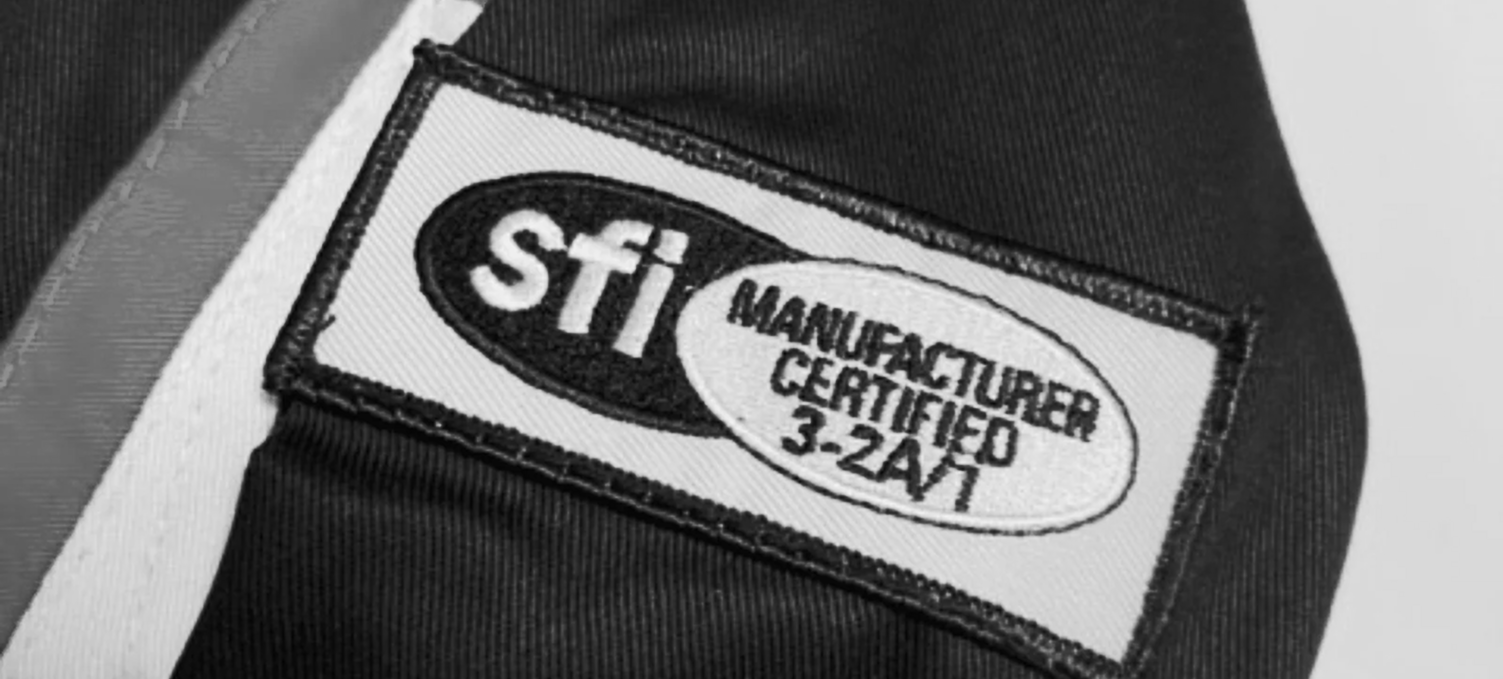
SFI 3.2a/1 vs SFI 3.2a/5: A Canadian Racer’s Guide to Choosing the Right Rating

SFI 3.2A/1 and SFI 3.2A/5 are single-layer and two-layer fire-resistant racing suit ratings. The number after the slash is the layer count, not a difficulty score — 3.2A/5 provides roughly double the thermal protection (TPP) of 3.2A/1. Most competitive Canadian series, including ASN Canada FIA and NASCAR Pinty’s, require the higher 3.2A/5 rating as their minimum for wheel-to-wheel racing.
If you are shopping for a racing suit in Canada for the first time, the rating system stops most people cold. SFI 3.2a/1, SFI 3.2a/5, TPP values, single layer, multi-layer — it looks like a spec sheet written for engineers. It is not. Once you understand what the numbers actually measure, the choice becomes straightforward.
This guide explains what every number means and how to pick the right rating for your driving program — without overpaying or under protecting yourself.
What SFI Ratings Actually Measure
SFI Foundation is a non-profit organization that sets and administers safety standards for motorsport equipment across North America. When a racing suit carries an SFI certification, it means the suit passed a standardised laboratory fire test — it was not self-certified by the manufacturer.
The specification number for racing suits is SFI 3.2a. The number that follows the slash — the /1 or the /5 — tells you the suit’s Thermal Protective Performance (TPP) rating. TPP is the single most important number on your suit’s tag.
What Is TPP?
TPP measures how long a suit protects your skin from a second-degree burn when exposed to a fully involved fuel fire at approximately 1,800 to 2,100 degrees Fahrenheit. The formula is simple: divide the TPP number by two to get the approximate seconds of protection.
| SFI Rating | TPP Value | Protection Time |
|---|---|---|
| SFI 3.2A/1 | 6 | ~3 seconds |
| SFI 3.2A/5 | 19 | ~10 seconds |
| SFI 3.2A/15 | 60 | ~30 seconds |
| SFI 3.2A/20 | 80 | ~40 seconds |
Three seconds versus ten seconds does not sound like a dramatic difference until you are the one getting out of the car. Ten seconds is the difference between a controlled exit and a serious injury.
SFI 3.2A/1 — What It Is and Who It Is For
The Basics
An SFI 3.2A/1 suit is a single-layer suit built from flame-resistant fabric — most commonly FR cotton treated with a chemical finish such as Pyrovatex or Proban, or a lightweight Nomex-blend. It provides approximately 3 seconds of fire protection before a second-degree burn begins.
Who Should Consider It
SFI 3.2A/1 suits are the entry point for Canadian racers in classes where fire risk is considered lower and the rulebook specifies a minimum SFI certification without mandating a higher rating. They are common in:
- Rookie and novice oval classes at local Ontario short tracks
- Certain kart classes that require a fire-rated suit (confirm with your specific series)
- Arrive-and-drive track day programs with a minimum suit requirement
- Junior or beginner classes where budget is a genuine constraint
The Important Caveat
If you run an SFI 3.2A/1 suit without a certified SFI 3.3 fire-resistant undergarment, your total protection is limited to that 3-second window. Many series that allow a 3.2A/1 suit require the undergarment layer underneath. Check your rulebook before assuming your suit alone is sufficient.
SFI 3.2A/5 — What It Is and Who It Is For
The Basics
An SFI 3.2A/5 suit is a two-layer or multi-layer suit that delivers a TPP of 19 and approximately 10 seconds of fire protection. The additional layer dramatically increases protection without adding as much bulk as drivers often expect — especially in modern Nomex construction, where two-layer suits are engineered to be light and breathable.
Who Should Use It
SFI 3.2A/5 is the standard minimum for most competitive Canadian racing programs. It is the rating you should target if any of the following apply:
- You compete in a wheel-to-wheel class at a sanctioned oval or road course
- You run a fuel-injected, carburetted, or alcohol-burning car
- You want meaningful fire protection rather than minimum compliance
- You are stepping up from recreational driving to competitive racing
Most experienced Canadian racers — whether running short track, dirt, drag, or road course — use SFI 3.2a/5 as their baseline. The additional 7 seconds of protection is not theoretical. It is the margin that lets a fire crew reach you.
EPIC Racewear’s SFI 3.2A/5 Options
Our custom SFI 3.2A/5 racing suits are built to your measurements, in your colours, with your sponsor logos — using two-layer Nomex construction. The same suit worn by North American racers from weekly short track to regional series competition.
What Canadian Racing Series Actually Require
Every series sets its own minimum. There is no single national standard that applies to all Canadian motorsport. Here is a practical breakdown:
ASN Canada FIA Sanctioned Events
ASN Canada FIA is the national sporting authority for FIA-sanctioned motorsport in Canada. Most ASN-sanctioned road racing and circuit events require a minimum of SFI 3.2a/5 or an equivalent FIA 8856-2018 rated suit. Check the specific series supplementary regulations — SFI 3.2A/1 is generally not accepted at the sanctioned national level. Karting suits are not covered by this standard.
CASC Ontario and Regional Road Courses
CASC-OR club racing typically requires a minimum of SFI 3.2a/5 for wheel-to-wheel competition. Novice track day and HPDE programs may have lower thresholds — confirm with your event organiser before purchasing.
Ontario Short Tracks and Oval Racing
Ontario short track rules vary by track and series. Many local ovals accept SFI 3.2a/1 with an approved SFI 3.3 undergarment for entry-level classes, while higher classes and late model or modified divisions typically mandate SFI 3.2a/5. Always pull the current rulebook from your specific track — do not rely on what a fellow driver tells you in the pits.
Canadian Drag Racing
Canadian drag racing requirements scale with class speed and fuel type. Bracket racers and index classes typically start at SFI 3.2a/1 at lower elapsed times, with SFI 3.2a/5 becoming mandatory at faster classes. Alcohol and nitro programs require SFI 3.2a/15 or SFI 3.2a/20 rated suits. Confirm your class requirements through NHRA Canada rules or your regional drag association.
NASCAR Canada Series
NASCAR Pinty’s Series follows NASCAR rulebook standards, which require SFI 3.2a/5 minimum for all drivers. A NASCAR SFI 3.4 rated suit is recommended for full-time series competitors.
SFI 3.2a/1 vs 3.2a/5 — How to Decide
If you are still weighing the two, use this framework:
Choose SFI 3.2a/1 if:
- Your rulebook explicitly permits it for your class
- You are running a beginner or non-competitive program with lower fuel risk
- Budget is the primary constraint and you will pair it with SFI 3.3 undergarments
Choose SFI 3.2a/5 if:
- You are competing wheel-to-wheel in any sanctioned Canadian series
- Your class rules require it or recommend it
- You want genuine fire protection, not minimum compliance
- You plan to move up through classes and want a suit that stays legal
The honest answer for most Canadian racers is SFI 3.2a/5. The cost difference between a basic 3.2a/1 and a quality 3.2a/5 suit narrows considerably when you factor in custom construction — and the protection difference is substantial.
SFI Suit Validity — What Canadian Racers Miss
SFI 3.2a/1 and SFI 3.2a/5 Suits: These single-layer or multi-layer suits do not have a hard expiration date set by SFI. They remain legal as long as the manufacture/date tag is legible, the fabric is not damaged, worn thin, or ripped, and they have never been soaked in fuel or oil. However, manufacturers or local track tech inspectors may recommend replacement after heavy use.
SFI 3.2A/15 and SFI 3.2A/20 Suits: These high-performance, multi-layer professional suits expire 5 years from the month and year of manufacture punched or printed on the SFI patch
It is recommended that suits be replaced every 2 years.
This is different from FIA suits, which carry a 10-year homologation life. If you are buying a used suit, always check the manufacture date on the SFI tag — not the purchase date. A suit can be out of compliance before you ever put it on.
Frequently Asked Questions
Is SFI 3.2a/5 mandatory for Canadian short track racing?
It depends on your track and class. Many Ontario short tracks require SFI 3.2A/5 for competitive classes but permit SFI 3.2A/1 with approved undergarments at the entry level. Pull the rulebook for your specific track and class before buying.
Can I use an SFI 3.2A/1 suit at an ASN Canada event?
Generally no. Most ASN Canada FIA sanctioned road racing events require a minimum of SFI 3.2A/5 or FIA 8856-2018. Confirm in the series-specific supplementary regulations.
Does a custom suit cost more than an off-the-shelf suit?
Not necessarily — especially in Canada. EPIC Racewear custom SFI 3.2A/5 suits are built to your measurements and graphics at competitive pricing,
What is the difference between SFI and FIA certification?
SFI is the North American standard administered by the SFI Foundation. FIA is the international standard used in FIA-sanctioned European and global series. Some suits carry both certifications. For Canadian short track, oval, and drag racing, SFI is the required standard. For FIA-sanctioned road racing, FIA 8856-2018 or higher is typically required. Read more in our guide to FIA-rated racing suits.
Ready to Order Your Custom Racing Suit?
EPIC Racewear builds custom SFI 3.2A/1 and SFI 3.2A/5 racing suits — made to your measurements, your colours, and your sponsor graphics. No standard sizes. No generic stock suits. Every suit ships North America-wide with no cross-border duty.
Not sure which rating your series requires? Contact our team and we will check your rulebook with you before you order.