
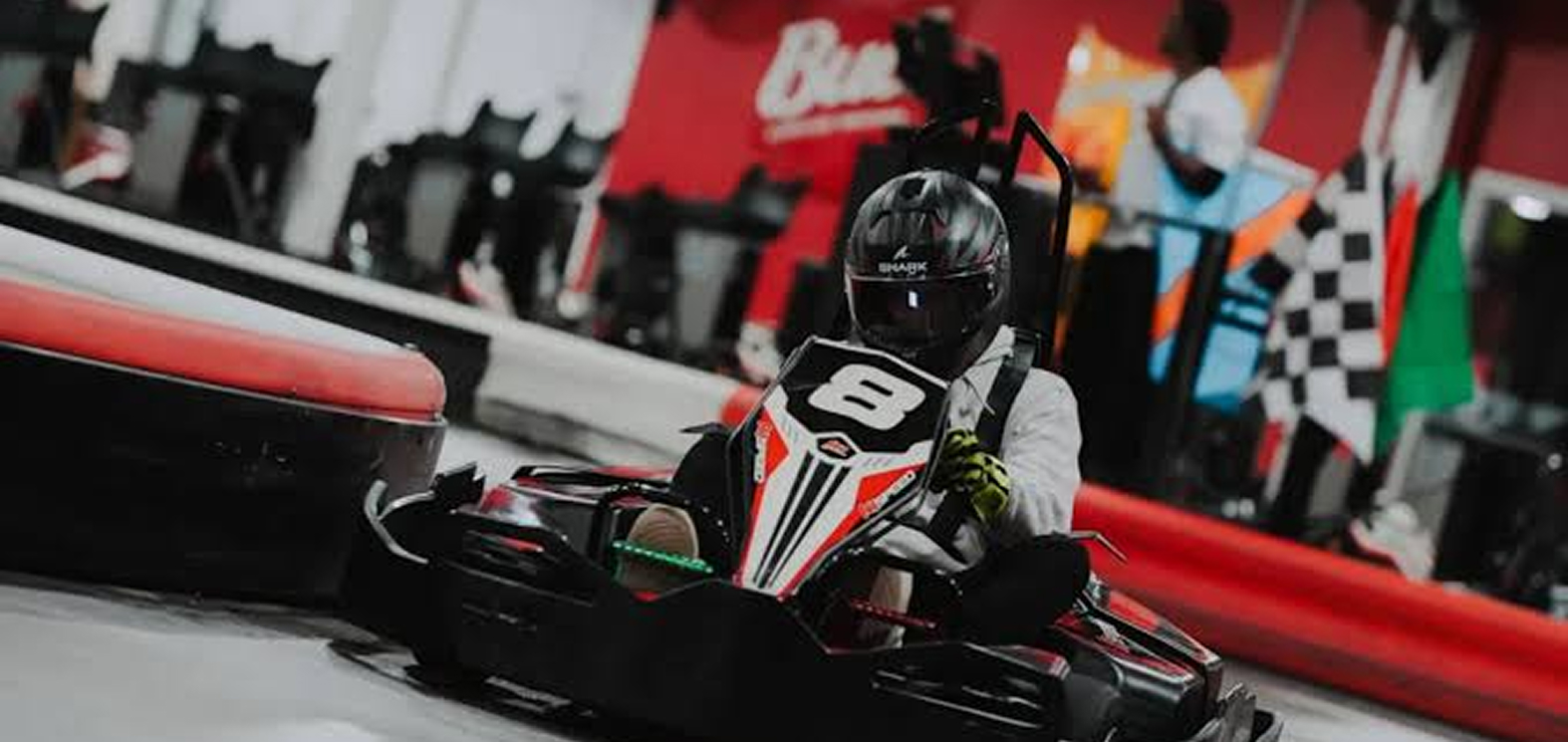

Karting is where most of Canada’s top motorsport talent begins. Lance Stroll, James Hinchcliffe, Alex Tagliani, and a long line of professional drivers all spent time on Canadian kart tracks before moving into open-wheel and touring car racing. For the thousands of drivers currently competing at club, regional, and national level across Ontario, Quebec, Alberta, and British Columbia, karting is a serious sport — and the gear requirements that come with competitive karting reflect that.
This guide covers what a Canadian kart racer needs to know about suits, gloves, shoes, helmets, and the certification standards that govern competitive karting in Canada in 2026. Whether you are transitioning from indoor arrive-and-drive to your first outdoor competitive class, or you are an experienced club racer looking to understand the new FIA 8877-2022 standard, this guide has the answers.
The Canadian Karting Landscape — Where People Race
Canada has a strong and geographically spread competitive karting scene, anchored by several major facilities and club programs that feed into regional and national championships.
Ontario
Ontario is the centre of Canadian competitive karting. Goodwood Kartways in Stouffville is one of the most historic facilities in the country, running programs from arrive-and-drive leagues through to the Goodwood Karting Club’s competitive season. Mosport Karting Centre at Canadian Tire Motorsport Park in Bowmanville offers a challenging 1.5-kilometre circuit with 12 corners, running an arrive-and-drive racing league alongside competitive club racing. The Hamilton Karting Complex (Canadian Mini-Indy) in Hamilton hosts Rotax Max Challenge rounds and provides a technical outdoor circuit for serious competitors. WRKC is based at Flamboro Speedway and boasts great kart counts and competitive racing.
Quebec
Quebec is home to SRA Karting International in Saint-Roch-de-L’Achigan, one of Canada’s most respected outdoor karting facilities and a regular venue for national-level events including the Rotax Mojo D1 Canadian Championship. ICAR Karting near Montreal at the Mirabel Airport site also draws competitive regional fields.
Alberta
The Calgary Kart Racing Club at Strathmore Motorsports Park serves the Alberta competitive karting community with a 1,225-metre, 14-turn track and structured club programming from beginner through competitive.
National series
At the national level, the Rotax Max Challenge Canada is the primary competitive karting series, running multiple classes from Mini-Max (for younger drivers) through DD2 (the senior high-performance class). ASN Canada FIA also sanctions karting at the national level, and drivers competing in ASN-affiliated events are subject to FIA gear requirements.
Arrive-and-Drive vs Competitive Outdoor Karting — Gear Requirements Are Different
The most important thing to understand before purchasing karting gear is that indoor arrive-and-drive sessions and outdoor competitive karting have completely different equipment requirements.
For indoor arrive-and-drive at venues like K1 Speed, helmets and neck braces are provided by the track. Closed-toe shoes and comfortable clothing are sufficient. No suit is required, no homologation is needed, and the cost of entry is purely the session fee.
For outdoor competitive karting — club racing, regional championships, and national series — the requirements are substantially different. Every piece of equipment that touches fire, abrasion, or impact risk is regulated. You will need:
- A club level or FIA 8877-2022 homologated karting suit
- Club level or Homologated karting gloves
- Club level or Homologated karting shoes
- A certified karting helmet (often Snell K2015 or CMR homologated)
- A neck collar or karting rib/neck protector
- A rib protector (mandatory in most competitive classes)
The rest of this guide focuses on the gear requirements for competitive outdoor karting in Canada.
Understanding FIA Karting Suit Standards — What Changed in 2025
The FIA updated its karting apparel certification standard in 2022, introducing FIA 8877-2022 as the replacement for the previous CIK-FIA Level 1 and Level 2 standards. This change has significant implications for Canadian competitive kart racers.
What FIA 8877-2022 means
FIA 8877-2022 introduced two grades:
Grade 1 provides a high level of protection against abrasion and is designed for drivers who want maximum protection. Grade 1 suits are heavier and slightly more restrictive in movement but offer the best protection in a slide or rollover incident.
Grade 2 is lighter and more movement-friendly, providing protection suitable for the majority of competitive karting environments. Grade 2 under FIA 8877-2022 is broadly comparable to the previous CIK-FIA Level 2 standard in terms of competitive acceptance.
Critically, FIA 8877-2022 expanded homologation requirements to include gloves and shoes — not just suits. From January 2025, gloves and shoes meeting FIA 8877-2022 are mandatory for all karting competitions on the FIA International Sporting Calendar.
The transition timeline Canadian racers need to know
Suits manufactured to the old CIK-FIA 2023-1 Level 2 standard can still be worn in competition through December 31, 2029. After that date, FIA 8877-2022 becomes the only accepted standard for FIA-calendar events. Manufacturers stopped producing gear to the old standard at the end of 2024.
The practical implication for Canadian kart racers: if you are purchasing new gear now, buy to FIA 8877-2022. If you have existing CIK-FIA Level 2 gear in good condition, it remains legal for competition through 2029.
Does FIA 8877-2022 apply to all Canadian karting?
Not automatically. Many Canadian club-level and regional karting events accept suits that are built to FIA/CIK standards without requiring the formal homologation patch, particularly in classes that are not directly affiliated with the FIA International Sporting Calendar. Always check your specific series or club technical regulations before purchasing. The rule of thumb: the higher the competitive level, the stricter the homologation enforcement.
Choosing a Karting Suit for Canadian Competition
Construction differences between karting and car racing suits
Karting suits and car racing suits serve different purposes and are built differently. A karting suit is primarily designed for abrasion resistance — the main injury risk in a kart incident is sliding across pavement or track surface, not fire. Karting suits are built from Cordura, nylon, and similar durable synthetic materials, not Nomex. They are not fire-rated in the same way as SFI or FIA 8856-rated auto racing suits.
Car racing suits designed for circuit or oval racing — like the SFI 3.2A/5 suits used by stock car, late model, and drag racing drivers — are built primarily for fire resistance and thermal protection. Do not use a Nomex car racing suit as a karting suit, and do not use a karting suit for car racing. They are separate products for separate applications.
Custom vs off-the-shelf karting suits
Most karting suits are purchased off the shelf in fixed colourways. Stock suits from brands like OMP, Sparco, and Alpinestars are widely available and meet the necessary homologation standards — but they come in generic designs that do not reflect team colours, sponsor graphics, or personal branding.
EPIC Racewear builds fully custom karting suits for Canadian kart racers. Both sublimated and embroidered options are available. Sublimated suits use dye-sublimation printing to produce full-colour graphics across the entire suit surface — team colours, sponsor logos, personal numbers, and design elements that are unique to the driver. Embroidered suits use thread-based logo application for a more traditional look. Both are built to FIA homologation standards and ship from Walkerton, Ontario to kart racers across Canada and the United States.
Sizing a karting suit correctly
Karting suits are typically sized tighter than car racing suits because the driving position in a kart — low-slung, legs extended, arms forward — requires a close fit to avoid excess material bunching at the joints. Measure your chest, waist, hips, inseam, and arm length, and compare those measurements to the manufacturer’s size chart rather than assuming your normal clothing size translates directly.
Karting Gloves — FIA 8877-2022 Requirements
As of January 2025, gloves for FIA International Sporting Calendar events must meet FIA 8877-2022 homologation. Karting gloves under this standard are tested for abrasion resistance, seam tensile strength, and heat resistance — the same tests applied to the suits.
Karting gloves are substantially different from auto racing gloves. They are thinner and more tactile, prioritizing steering feel and grip rather than fire resistance. The palm construction typically uses silicone grip zones or perforated leather to maintain wheel feel in all conditions.
EPIC Racewear produces custom karting gloves that can be matched to your suit design — the same graphic file that produces your suit produces matching gloves, so your full kit is visually coordinated.
Karting Shoes — What Canadian Racers Need
Karting shoes are purpose-built for pedal operation in a kart’s tight footwell. They use a thin, flexible sole that transmits pedal pressure clearly without the bulk of a standard shoe or boot, a low-profile ankle cut for unrestricted movement, and a close-fitting upper that doesn’t shift during driving.
Under FIA 8877-2022, karting shoes for FIA International Sporting Calendar events must carry the 8877-2022 homologation from January 2025. For club-level and regional Canadian events, confirm the specific requirement with your series technical regulations.
EPIC Racewear’s custom karting shoes follow the same design process as gloves and suits — your full three-piece kit (suit, gloves, shoes) is built from a single design brief, with consistent colours and graphics across all three pieces.
Helmet and Protection Requirements
Helmet
For competitive karting in Canada, helmets must typically carry either Snell K2015 (or newer) or CMR homologation, depending on the driver’s age and the series. Check your specific series technical regulations — the Rotax Max Challenge Canada and club series affiliated with ASN Canada FIA will each have specific helmet certification requirements listed in their technical rulebooks.
Rib protector
The rib protector is mandatory in virtually all competitive karting classes in Canada. Kart G-forces — particularly through fast, sustained corners — place significant lateral load on the rib cage, and unprotected ribs are a common injury in kart incidents. The rib protector is worn under or over the suit depending on the specific design. Confirm which configuration your series permits.
Neck collar
A karting neck collar or neck brace is required by most competitive series and clubs. It provides support during the sudden direction changes and G-force loads that karting imposes on the driver’s neck. Confirm the specific certification required by your series.
Gear Checklist for Canadian Competitive Karting
Before your first competitive event, confirm you have every piece of the following:
Mandatory for most outdoor competitive events:
- Karting suit — FIA 8877-2022 Grade 1 or Grade 2 (or CIK-FIA Level 2 for existing gear through 2029)
- Karting gloves — FIA 8877-2022 (mandatory for FIA International Sporting Calendar events from 2025)
- Karting shoes — FIA 8877-2022 (mandatory for FIA International Sporting Calendar events from 2025)
- Karting helmet — Snell K2015 or CMR homologated
- Rib protector
- Neck collar
Check your specific series rulebook for:
- Whether homologation patches are required or if suits built to the standard without patches are accepted
- Specific helmet certification requirements (Snell K vs CMR, and which year)
- Whether gloves and shoes must carry the FIA 8877-2022 patch or if the standard without patch is accepted at club level
Custom Karting Gear from EPIC Racewear
EPIC Racewear produces custom karting suits, gloves, and shoes for competitive kart racers across Canada and the United States.
The custom process starts with your design brief — team colours, sponsor logos, personal numbers, and any graphic elements you want on the suit. EPIC’s design team produces a digital mockup for approval before production begins. Sublimated suits allow unlimited colour coverage and full-surface graphics. Embroidered suits apply logos and names through thread for a more traditional look.
Whether you are gearing up for your first competitive season at a club like Goodwood or preparing for a Rotax Max Challenge round, EPIC builds gear that is race-ready, properly certified, and custom to you. Contact the EPIC Racewear team to start your karting gear order.
Frequently Asked Questions
Do I need a special suit for competitive karting in Canada? Yes. For outdoor competitive karting at most Canadian clubs and regional series, you need a suit homologated to FIA 8877-2022 (Grade 1 or Grade 2) or, for existing suits, CIK-FIA Level 2 (valid through December 2029). Indoor arrive-and-drive sessions do not require a suit. Always confirm the specific requirement with your series or club technical regulations.
What is the difference between FIA 8877-2022 and CIK-FIA Level 2? FIA 8877-2022 is the current standard introduced by the FIA to replace the previous CIK-FIA Level 1 and Level 2 certifications. It also now covers gloves and shoes in addition to suits, and introduces two Grades instead of two Levels. Gear certified to the old CIK-FIA Level 2 standard remains valid for competition through December 31, 2029.
Can I wear my auto racing suit for karting? No. Auto racing suits designed for circuit or oval car racing — including SFI 3.2A/5 Nomex suits — are fire-resistant but are not designed for the abrasion protection that a kart incident requires. Karting suits are built from Cordura and nylon for abrasion resistance, not Nomex for fire resistance. They are separate products for separate applications.
Does EPIC Racewear ship karting gear across Canada? Yes. EPIC Racewear produces custom karting suits, gloves, and shoes and ships to all Canadian provinces and to the United States. Lead times for custom gear vary — contact the team directly for current estimates before your season begins.
What tracks in Ontario run competitive karting programs? Goodwood Kartways in Stouffville, Mosport Karting Centre in Bowmanville, WRKC at Flamboro, and the Hamilton Karting Complex are the primary outdoor competitive karting facilities in Ontario. Some run club programs and arrive-and-drive leagues. Goodwood and Mosport in particular have strong competitive programs that feed into national series.